
Mastering Multi-Currency Accounting and Real-Time Financial Audits in Modern Enterprises
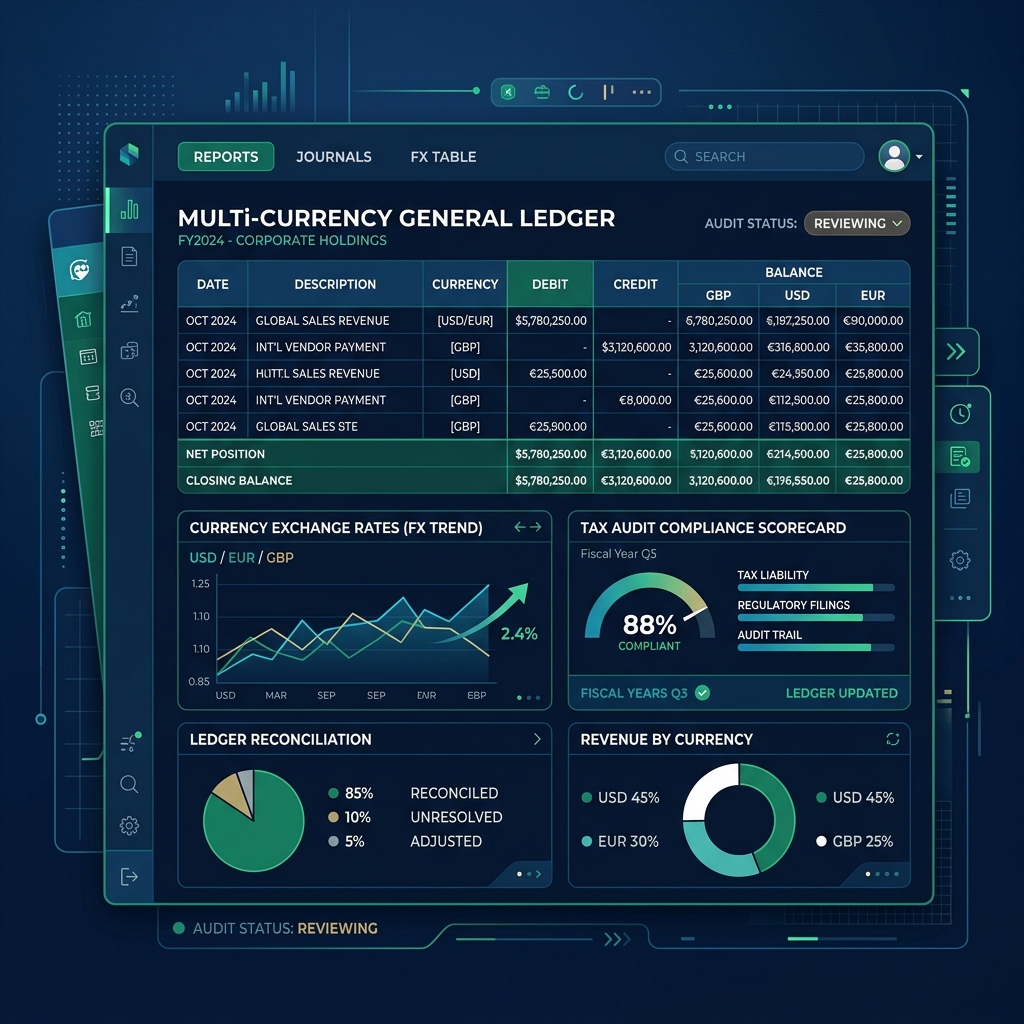
In today's globalized economy, business boundaries have dissolved. A retail group in East Africa buys merchandise from China in USD, operates stores in Rwanda using RWF and Kenya using KES, and reports financial consolidated results to European investors in Euros. In this multi-jurisdictional landscape, managing accounts manually using legacy systems is not only slow—it is highly risky.
Fluctuating exchange rates, varying regional tax laws, and manual reconciliation errors can easily turn a profitable quarter into a financial disaster. Modern enterprise resource planning (ERP) platforms must provide robust multi-currency ledgers, automatic tax compliance mechanisms, and real-time auditing capabilities to protect business margins.
1. The Multi-Currency Challenge: Beyond Simple Exchange Rates
For any business handling multiple currencies, accounting goes deeper than just converting prices at checkout. The system must account for two distinct types of currency valuations:
- Transaction Currency: The currency in which a specific deal, purchase, or invoice is processed (e.g., buying raw materials in USD).
- Functional Currency: The currency of the primary economic environment in which the business operates and reports its books (e.g., KES or RWF).
Automated Exchange Rate Syncing A resilient financial engine integrates directly with central bank feeds and live financial APIs. This ensures exchange rates are updated daily, preventing cashiers and purchasing agents from using outdated conversions that lead to immediate margins erosion.
Realized vs. Unrealized Gain and Loss If you issue an invoice in USD worth $10,000 when the rate is 1:1,000, and the customer pays 30 days later when the rate is 1:1,050, you have realized a gain of 500,000 units. The system must automatically calculate, post, and categorize these exchange differences to separate ledger lines without human intervention.
Currency Revaluation Audits At the end of each fiscal period, open foreign accounts receivable and payable must be revalued using period-end spot exchange rates. A modern financial system handles this process instantly, recording balance sheet adjustments automatically to comply with International Accounting Standards (e.g., IAS 21) or GAAP (ASC 830).
2. Real-Time General Ledger: Eliminating the "Month-End" Panic
Historically, businesses operated on a periodic accounting cycle. Transactions were recorded daily, but reconciliation, balancing, and financial reporting only happened at the end of the month. This created a stressful "month-end close" week where accounting teams worked overtime to find missing receipts and balance the ledger.
Continuous Accounting By automating bank statement feeds, expense matching, and payment reconciliations, a modern system distributes the workload evenly. Transactions are categorized and reconciled the moment they hit the bank account, turning financial reports into live, interactive dashboards.
Sub-Ledger Integrity Sales, inventory adjustments, and payroll calculations must sync instantly to the General Ledger (GL). This prevents discrepancies between what the warehouse manager claims is in stock and what the Chief Financial Officer (CFO) sees on the balance sheet.
3. Multi-Jurisdictional Tax Compliance: Automating VAT, GST, and Sales Tax
Navigating tax rules across different regions is a major operational hurdle. Each country or state has unique tax brackets, exemption rules, and reporting frequencies.
Dynamic Tax Engine The platform applies the correct Value Added Tax (VAT) or Goods and Services Tax (GST) based on the location of the transaction, the customer's tax status, and the product category. For example, some items like essential foodstuffs may be zero-rated, while electronics carry standard tax rates.
Tax Remittance Reports Instead of manually compiling sales registers to compute quarterly tax liability, the system generates ready-to-file tax summaries, complete with tax-deductible inputs from purchase orders, saving hours of manual labor and preventing expensive compliance penalties.
4. Landed Cost Calculation: Unveiling True Product Profitability
A common accounting trap is evaluating profit margins based purely on the supplier's invoice price. If a business buys an item for $10 but pays $2 in shipping, $1 in customs duty, and $1 in local port handling fees, the actual cost of that product is $14, not $10.
Landed Cost Allocation A mature financial module allows you to allocate landing charges (freight, duties, insurance, clearing agent fees, and handling) across the items in a shipment, either by weight, volume, or cost. This ensures your stock is valued accurately on the balance sheet and prevents you from underpricing items and losing money.
5. Ledger Security and Bulletproof Audit Trails: Fraud Prevention
Internal fraud and undocumented ledger adjustments represent a massive threat to enterprise health.
Immutable Audit Logs Every financial transaction, adjustment, or manual ledger entry must write an unalterable log file. The log must record:
- The exact database change (before and after values).
- The timestamp of the transaction.
- The unique user ID of the staff member who initiated the change.
- The IP address and device fingerprint.
Segregation of Duties (SoD) To prevent collusion, the system enforces access control rules. The person who creates a purchase order cannot be the same person who approves the payment, ensuring multiple eyes review every cash outflow.
Two-Factor Ledger Authorization For high-value manual journal entries or bank transfer approvals, the system requires secondary authentication or multi-admin approval workflows, creating a protective barrier against internal fraud.
Before vs. After: The Impact on Corporate Finance
Without Enterprise Ledger Management:
- Currency exchange gains and losses are calculated manually on spreadsheets, leading to reporting errors.
- Financial health is only visible 15 days after the month ends, delaying critical strategic decisions.
- Tax filings require manual consolidation of invoices, risking penalties for late or incorrect returns.
- Audits are stressful, requiring paper-trail searches through filing cabinets.
- Landed costs are ignored or calculated poorly, leading to false margins and unexpected losses.
With Inzora Business Suite's Finance Module:
- Exchange rates are synced automatically, with realized and unrealized currency gains calculated in real-time.
- Live balance sheets, cash flow statements, and profit-and-loss dashboards are available 24/7.
- Taxes are calculated automatically at checkout, with regional compliance reports generated instantly.
- Secure, immutable audit trails allow internal and external auditors to verify records in hours, not weeks.
- Landed costs are automatically allocated to inventory items, giving a true picture of operational profitability.
The Strategic Decision: Empowering Executive Leadership
In a competitive market, speed is everything. Executives cannot afford to wait weeks for accountants to reconcile spreadsheets before deciding whether to expand operations, purchase inventory, or adjust pricing.
Inzora Business Suite's Finance and Accounting Module bridges this gap, providing leaders with real-time financial accuracy, automated global compliance, and the security needed to scale confidently across international borders.