Audit-Ready NGO Management: Streamlining Grants, Projects, and Compliance Tracking
Non-governmental organizations (NGOs) and non-profit organizations face unique operational challenges. Unlike commercial entities motivated by profit, NGOs measure success through project execution, community impact, and resource optimization. However, maintaining donor trust requires absolute financial transparency, structured milestone tracking, and strict adherence to international grant requirements.
Legacy software or manually managed spreadsheets often fail to meet the rigorous standards demanded by international auditors. In this article, we explore how Inzora Business Suite's specialized NGO Module bridges these operational gaps to ensure organizations stay compliant, efficient, and audit-ready.
The Complexity of Modern NGO Operations
Modern NGOs operate in a highly regulated and scrutinized environment. Donors, whether international agencies, private foundations, or individual contributors, demand to know exactly how their funds are utilized. The core challenge lies in mapping financial transactions to real-world outcomes. When a donor funds a clean water project, they expect to see a clear line from the grant disbursement to the purchase of pipes, transport, labor, and the eventual commissioning of the water station.
Without a unified platform, this requires manual cross-referencing between banking records, receipt books, and project reports—a process prone to errors and highly stressful during audits.
1. Structured Project & Program Tracking
Managing multiple humanitarian campaigns or development projects requires clear visibility into tasks, execution timelines, and resource allocations.
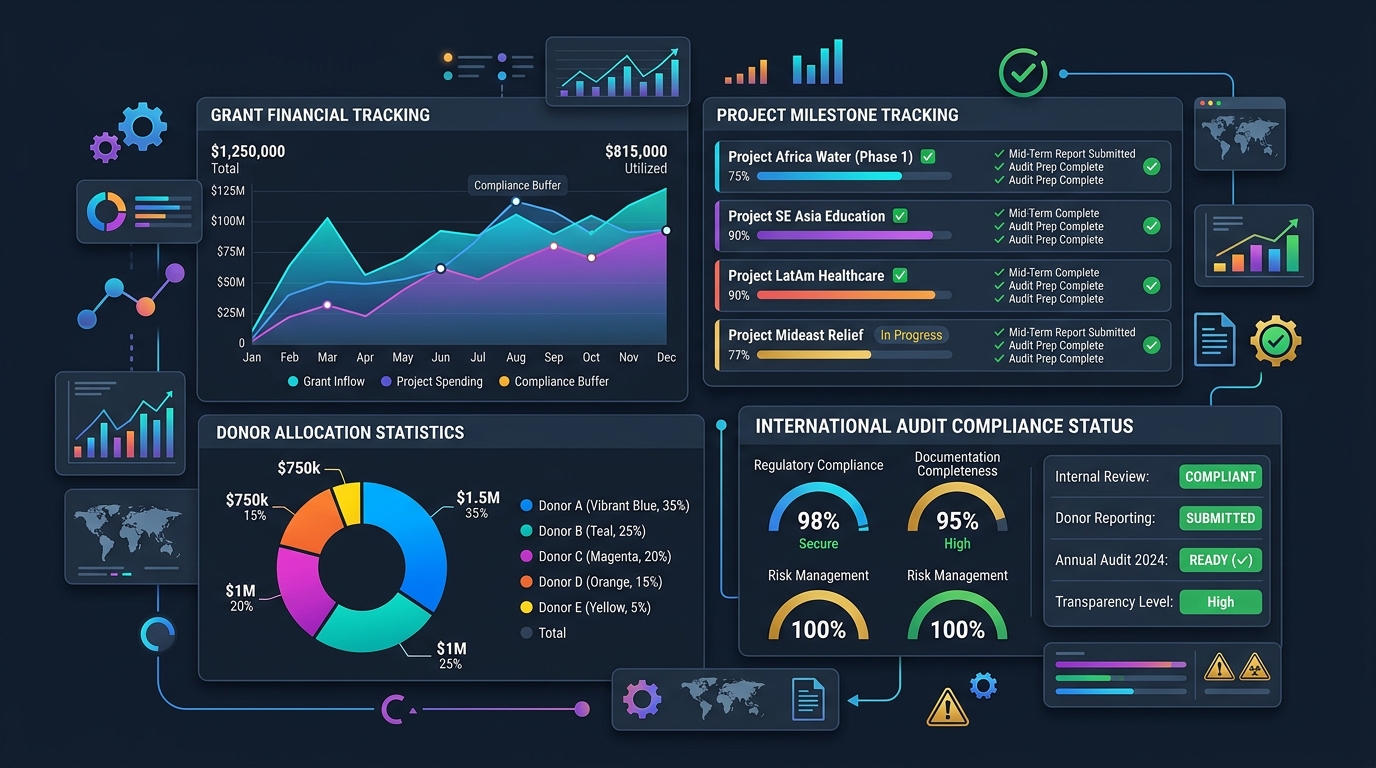
With Inzora's Program Tracker, NGOs can:
- Define Key Milestones: Break down large initiatives into specific, measurable goals (e.g., Phase 1: Site Survey, Phase 2: Drilling, Phase 3: Distribution).
- Establish Budgets Per Phase: Link financial allocations directly to project phases to prevent overspending and unauthorized budget reallocations.
- Track Progress and Hand-offs: Coordinate field teams and office staff in real-time, monitoring execution updates directly from the central dashboard. Field officers can mark milestones as complete and upload photo verifications, creating an instant record of impact.
2. Comprehensive Donation & Grant Registry
Donor funding is the lifeblood of any non-profit organization. Properly tracking the lifecycle of each donation—from pledge to disbursement—is essential.
- Donor Profiles: Maintain centralized profiles tracking previous support, communication histories, and preferences. Knowing your donors enables long-term relationships and sustainable fundraising.
- Grant Allocation Logs: Assign specific funding pools to matching program tasks, ensuring restricted funds are used strictly for their designated purposes. The platform flags any attempt to spend restricted grant funds on unrelated administrative costs.
- Automated Donation Receipts: Generate instant, tax-compliant receipt certificates for donors to streamline year-end reporting.
3. Expense Tracking & Grant Compliance Auditing
During international audits, organizations must prove that every dollar, euro, or local currency unit was spent appropriately. Under-documented spending can lead to grant cancellations or legal liabilities.
- Double-Entry General Ledger: Automatically map operational expenses directly back to donor-funded accounts, maintaining segregation between general funds and restricted project funds.
- Receipt & Attachment Logs: Allow field teams to upload receipts directly from mobile devices using the PWA client, locking proof-of-purchase to transaction histories.
- Multi-Currency Compliance: Easily translate exchange rates for foreign donors while maintaining functional accounts in local currencies, automatically calculating realized and unrealized currency gains/losses.
Empowering Non-Profits to Focus on Impact
By automating administrative overhead and streamlining audit preparations, Inzora Business Suite allows non-profits to focus their energy where it matters most: helping communities. Transitioning to a unified, secure system eliminates paper trails, prevents compliance mistakes, and strengthens relationships with key stakeholders.